FIFTY YEARS AT LAUREL
A Distribution Center Built on People, Purpose, and Change
For 50 years, GPO’s Distribution Center in Laurel, Maryland, has quietly played a vital role in delivering Government information to the Nation, distributing more than 600 million publications along the way. From pallets of printed materials rolling out daily to today’s streamlined, technology-driven operation, the Laurel facility and teammates have continually evolved to meet the needs of Government agencies and the public they serve.
What hasn’t changed is the dedication of the people inside the building.
A Facility Built for Scale
In its early decades, Laurel was designed for volume. At its peak in the 1980s, the complex spanned more than 400,000 square feet across four buildings, supported three shifts, and employed more than 550 teammates. Train tracks once ran between buildings, allowing pallets of publications, especially Code of Federal Regulations (CFRs), to move efficiently across the site.
“The trucks were constantly coming in and out,” recalled John Wilkins, a Work Leader in Library Services & Content Management’s Depository Distribution Division who joined GPO in 1990. “There were more buildings, more employees, a machine room, a mailing section. It was always moving.”
At the time, Laurel even housed a public-facing bookstore, on-site U.S. Postal Service clerks, medical services, and a credit union, making it a nearly self-contained extension of GPO’s main campus.
“It felt like a little city,” said Gail Sebron, Laurel’s longest-tenured teammate. “We had everything here. Shuttle vans would take people downtown and bring them back.”
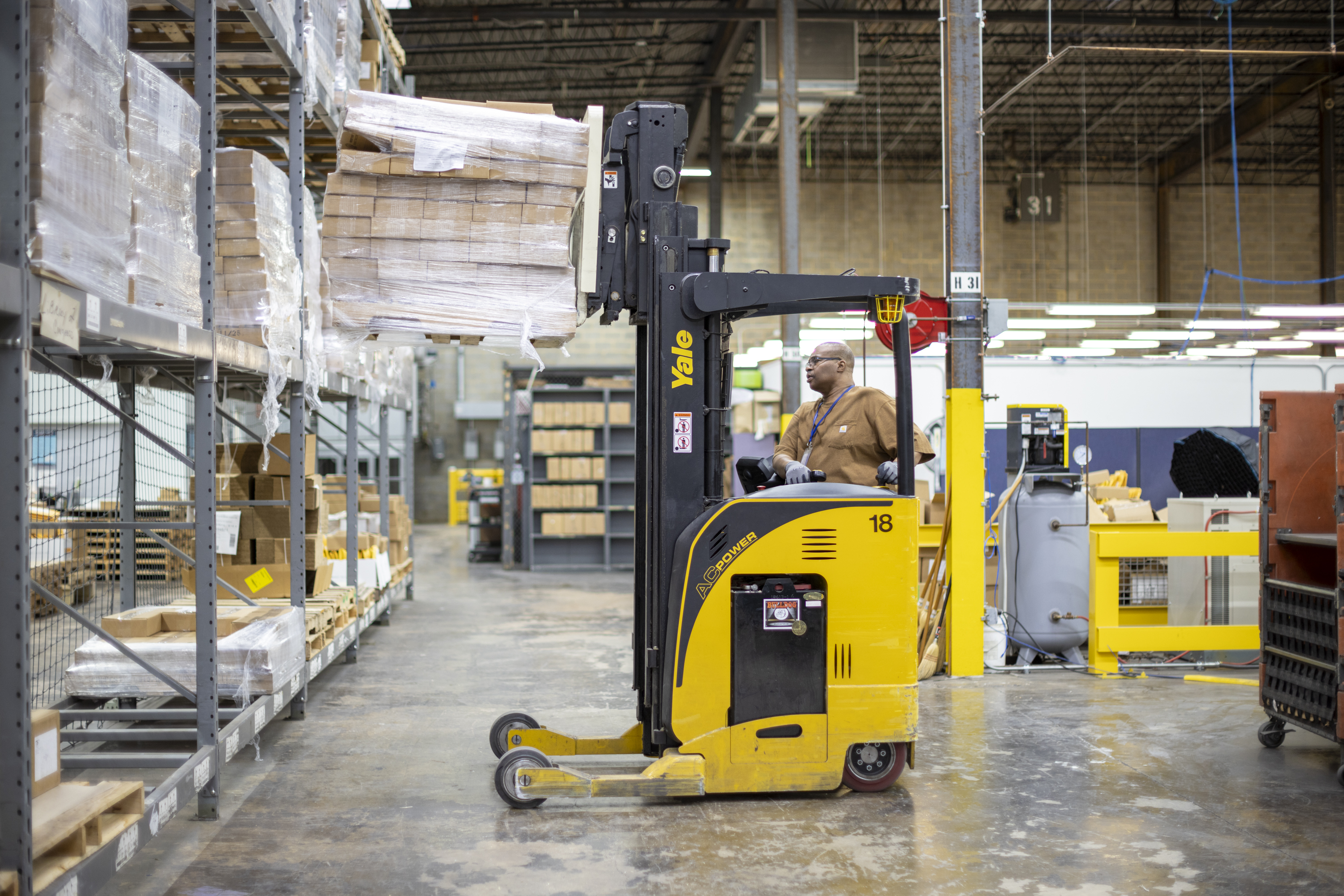
Above: John Wilkins, a Work Leader in Library Services & Content
Management’s Depository Distribution Division, joined GPO in 1990.
Then and Now
Today, Laurel’s footprint is more focused, about 140,000 square feet with fewer than 40 teammates, but its reach has expanded in new ways. Laurel is now the sole distribution location for 100 percent of GPO Bookstore orders and serves as the distribution hub for more than 30 Federal partner agencies.
That shift reflects a broader evolution in Government publishing. While Bookstore sales revenue exceeded $35 million annually in the early 2000s, digital access transformed demand. By the mid-2020s, Bookstore revenue hovered around $2 million per year. At the same time, reimbursable Agency work has surged, growing from about $1 million annually in the early 2000s to more than $7.5 million per year today, with peaks exceeding $11 million during major national initiatives.
“The workload is different now,” Wilkins said. “But we still do a little bit of everything. That’s how Laurel operates.”
A Lean Operation, Powered by Technology
When Andres Aguilera arrived at Laurel in 1990, more than 200 teammates processed orders manually across highly specialized sections.
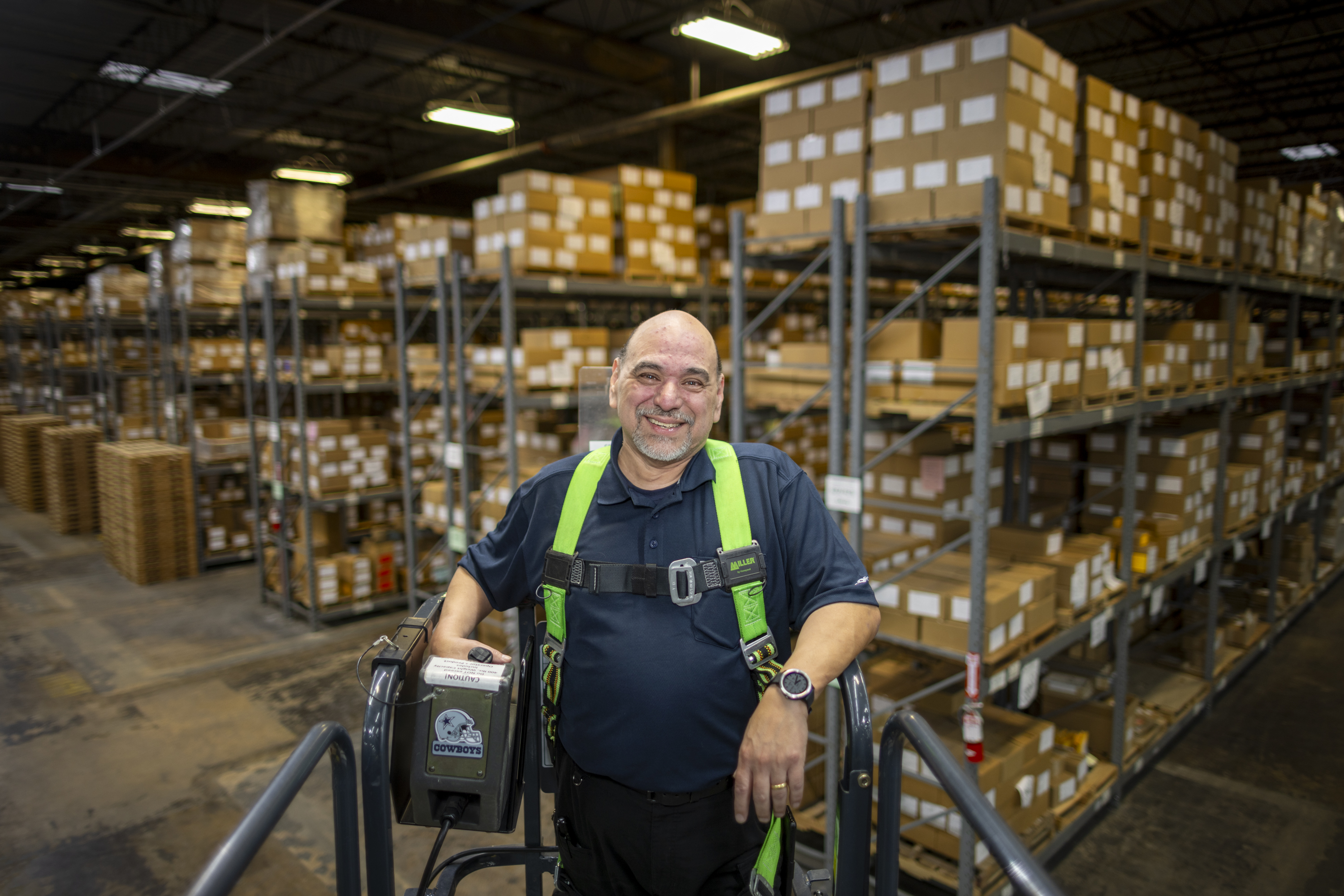
Above: Andres “Andy” Aguilera is a Materials Handler who has
spent 35 years at GPO.
“In my section alone, we had eight people completing about 1,500 orders a day,” said Aguilera, a Materials Handler who has spent 35 years at GPO.
Today, advanced inventory systems and automation guide nearly every step of the process, from where products are stored to how orders are consolidated and shipped.
“Before, you had to hunt for space in the warehouse,” Aguilera said. “Now the inventory management system helps you identify areas in the warehouse with similar items.”
What once took two to four days to process is now often completed in under four hours, with multiple orders consolidated into a single carton instead of several. Those efficiencies save the Agency more than $1 million per year in transportation costs, a quiet but powerful example of modernization at work.
Supporting the Nation
Over 50 years, Laurel has distributed everything from U.S. Constitutions and Declarations of Independence to CFRs and OPM Merit Certificates. In recent years, the center has played a critical role in supporting Federal initiatives, including serving as the distribution hub for the 2020 Census promotional campaign, its largest single customer between 2019 and 2021.
Today, Laurel’s largest customers include the United States Department of Agriculture’s Food and Nutrition Service, which stores more than 1,700 pallets of materials on site, and the Substance Abuse and Mental Health Services Administration, Laurel’s highest-revenue customer, supporting programs such as the 988 Suicide & Crisis Lifeline.
“These materials go to conferences, outreach centers, and communities,” Aguilera said. “They help people get information they really need.”
The People Behind the Numbers
For all the statistics, Laurel’s story is ultimately a human one.
Gail began her career in mail services when the U.S. Postal Service operated on site, later becoming a forklift driver, supervisor, and liaison between Laurel and GPO’s main facility.
“I tell people, ‘I put a book in a box and send it out,’” she said. “That keeps me grounded.”
Aguilera’s willingness to learn every part of the operation, from manual warehouse work to early computer systems, helped him adapt through decades of change.
“I didn’t care what my title said,” he said. “I just wanted to learn.”
Wilkins echoed that sentiment.
“I felt like I was treated right here,” he said. “That’s why I stayed.”
Honoring the Past, Preparing for the Future
As Laurel celebrates its 50th anniversary, its footprint may be smaller than it once was, but its impact remains significant. The distribution center continues to adapt, supporting Federal agencies, libraries, and the public with efficiency and care.
And at the heart of it all are teammates like Aguilera, Sebron, and Wilkins – living links between Laurel’s past and its future.
Their stories reflect what has always defined the Laurel Distribution Center: resilience, service, and the people who make it work – one box, one shipment, and one change at a time.
Download PDF