IN UNIFORM AND BEYOND
Five Questions with the Uniformed Police Branch Captain Norman Gordon
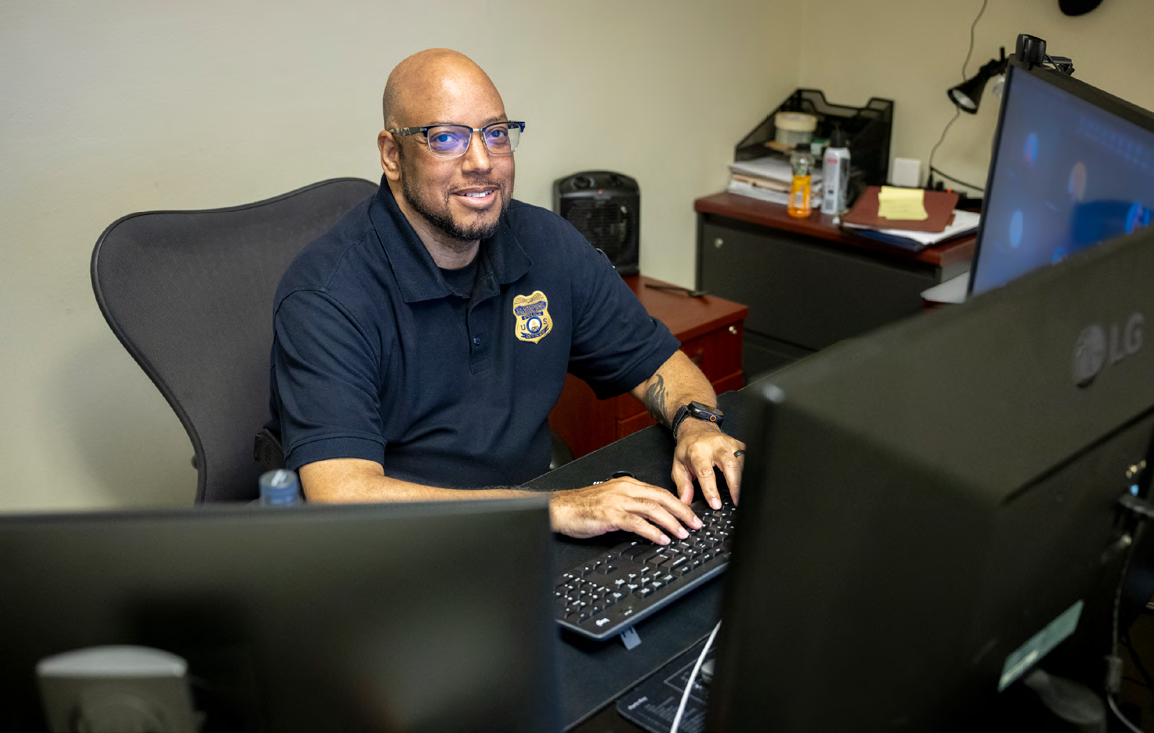
After more than two decades of service, Norman Gordon has risen through the ranks to become Captain of GPO’s Uniformed Police Branch. Gordon reflects on his career, the evolution of GPO’s police force, and the challenges and opportunities ahead.
1. When did you start working at GPO, and how has the police force changed since then?
Working presidential inaugurations has been a highlight. I’ve served at every inauguration since I joined GPO, including both of President Obama’s, both of President Trump’s, and President Biden’s. But beyond the events, my favorite part has been the people I’ve worked with and the growth I’ve witnessed at GPO. Over the years, we’ve gone from being the Government Printing Office to the Government Publishing Office, and we’ve strengthened our reputation as a vital institution.
2. What have been some of your most memorable experiences on the job?
I started working at GPO in April 2003. When I first arrived, the department was more of a security role than a true police force, and we didn’t have the best reputation. We were often viewed as little more than low-level security guards. That changed when Chief LaMont Vernon came on board and transformed the culture and professionalism of the department. Since then, the branch has seen growth and improvement in so many ways, training has expanded significantly, and our department has earned much greater respect.
3. Tell us about your new role as Captain. What does it involve?
As Captain, I’ll be working closely with the Chief of Police LaMont Vernon to oversee the entire department. My responsibilities include logistics, training, administration, operations, and ensuring the safety of both our teammates and assets. It’s a big step, but I feel confident because I have a great team of lieutenants and officers by my side.
4. What challenges do you see ahead for the department?
Two main challenges stand out. First is perception; national debates and controversies about policing affect us locally, even when we’re not directly involved. The actions of one officer across the country can shape public views of all officers. Second is retention. Today’s younger workforce tends to move quickly from job to job, so we’re focused on finding ways to retain talent through strong training, mentorship, and incentives.
5. What might surprise people about you outside of work?
I’m actually a bit of a nerd! I’ve always loved comic books and superheroes, and I collect comics and figurines. I’ve been attending Comic Cons since I was in my early 20s, though mostly smaller ones, not the big California events. It’s a passion that started in the military and stuck with me ever since.
Looking Ahead. From his early days walking past GPO on his way to work at the Smithsonian, to now leading a 50-officer police force, Captain Gordon describes his GPO career as “one of the best choices I ever made.” With more than 22 years of service, he remains focused on growth, professionalism, and building a department that is both highly trained and highly respected ever since.